
| Winchester Model 1876 Saddle Ring Carbine |
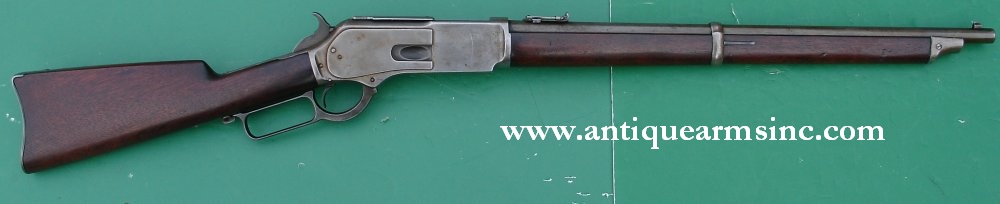
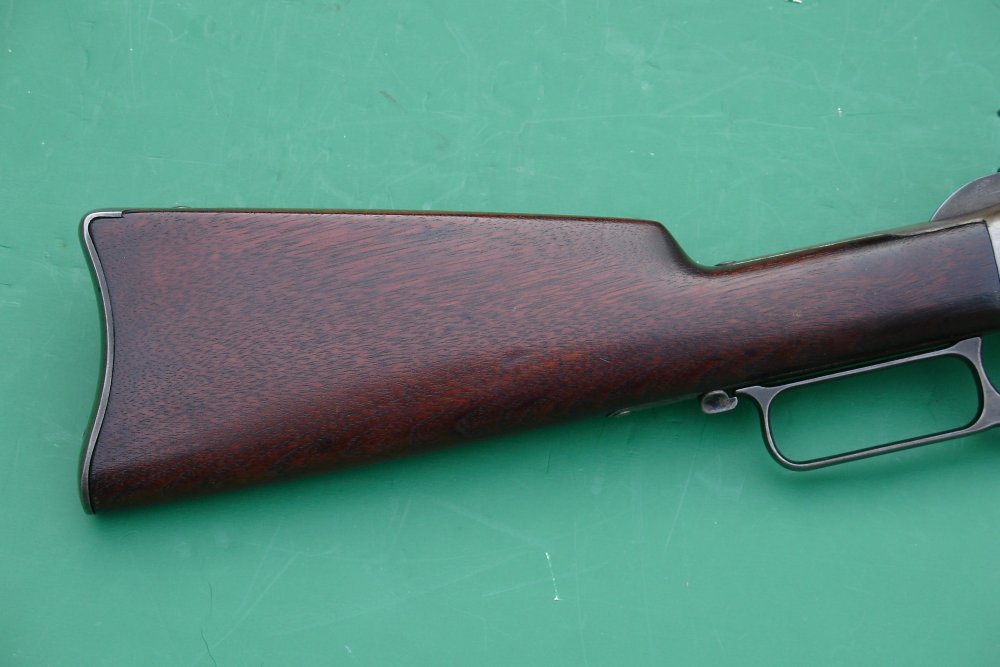
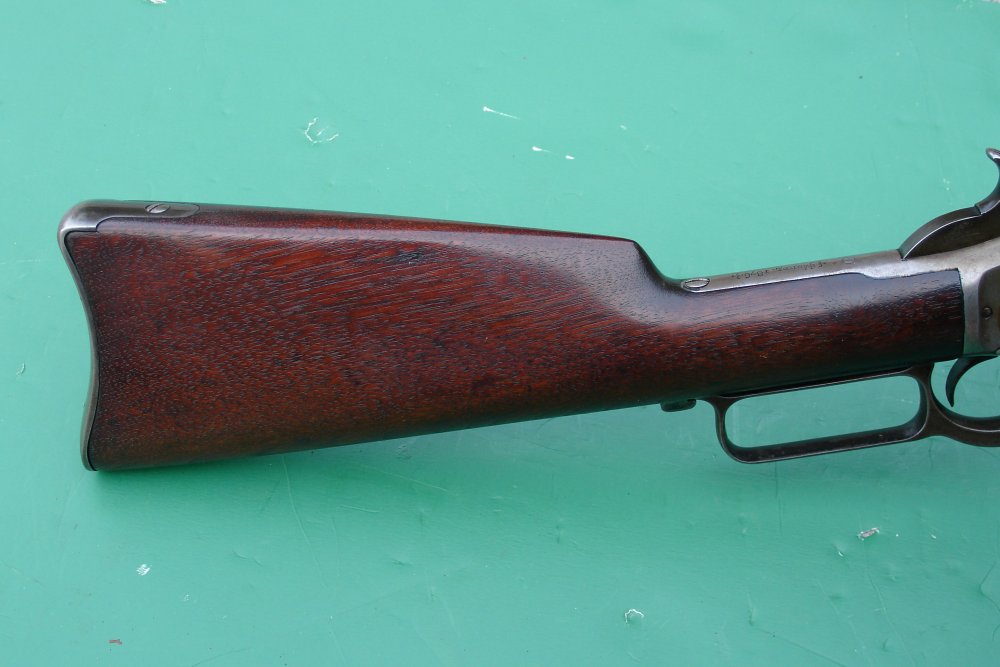
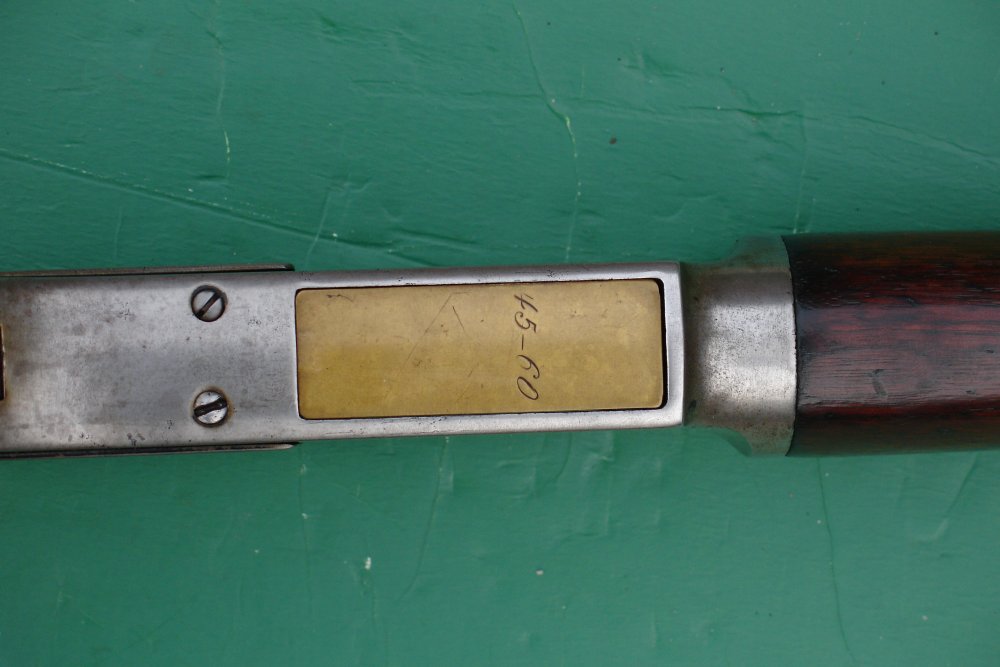
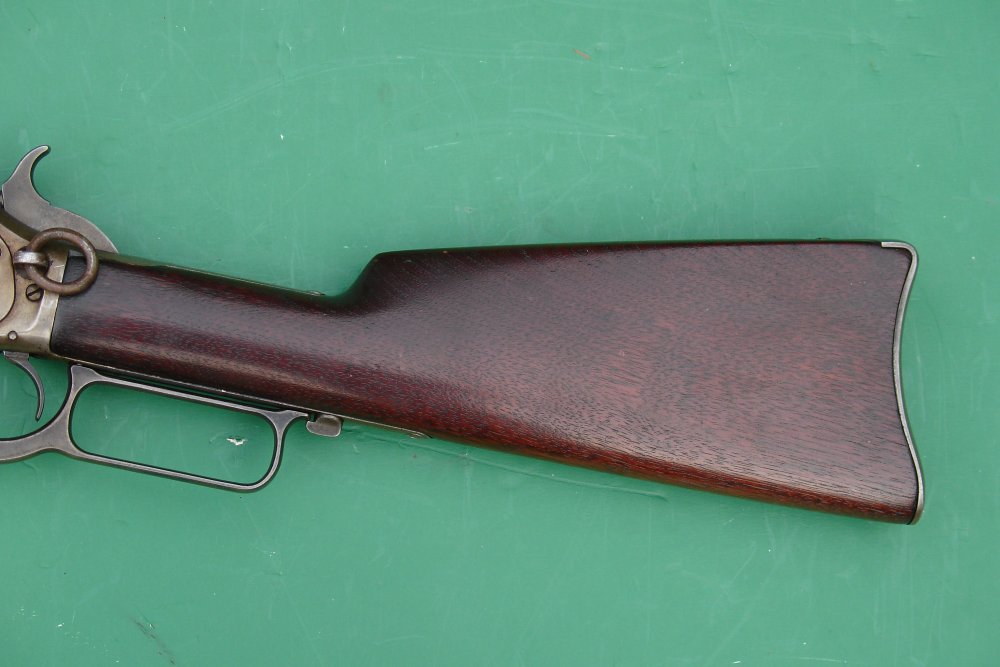
This is a Winchester Model 1876 SRC in caliber 45-60. Serial number is in the 33,000 range. Mfd in 1883. The Model 1876 was the last lever action to be produced in Oliver Winchester's lifetime. The model largely spun from Winchester's determination to beef up his lever action rifle to handle larger calibers in hopes the design could win the company military contracts. Ever since the Civil War and the famed Henry rifle, Winchester had been pursuing the US gov't for a substantial military contract. Unfortunately, the US military and their Ordnance Boards were a pretty stiff bunch when it came to innovation. By 1870, they were barely tolerant of single shot breech loaders that fired fixed ammunition. Repeaters in their eyes were too complicated and a waste of ammunition. They viewed a good soldier as one who was a good shot and miserly with ammunition. Guess that worked great out on a target range with nobody firing back...but not so sure the few surviving members of the US 7th cavalry would have agreed with their assessment. Winchester's dreams of courting the US government went unfulfilled and so he turned to foreign markets. Aside from a contract of muskets that went to Hawaii and several thousand carbines issued to the Canadian NWMP, the 1876 never reached Winchester's expectations as a military rifle but it did favor well with the NWMP and earned a good reputation as a sporting rifle for large game. Introduced at the Great Exhibition in Philadelphia in 1876, the model was dubbed the Centennial Model and helped win Winchester a bronze medal. This one is a standard carbine configuration with 22" round barrel, full stock fore-wood, saddle ring, carbine buttplate, saddle ring, and ladder sight. Note the sight is the early reverse-style with the graduations located on the bottom of the ladder. The bottom of the ladder is correctly marked "1876" (instead of 1873) and the graduations are a little different from what you find on the Model 1873. Instead of 200 to 900 yard marks, the 1876 carbine sight is marked out from 200 to 1,000 yards. The 45-60 cartridge was developed by Winchester mainly to appease their customers who liked the 1876, but were not so fond of the punishment they had to endure from its original chambering and number one son, the 45-75. The 45-60 was a little more of a gentleman with 15 grains less powder than the 45-75. The lead bullet was reduced from 350 grains down to 300. The shell casing was also reduced (probably in width) from the bottle-necked shape of the 45-75 to a straight case. Initially introduced in June 1879 and first appearing in the Aug. 1880 catalog, orders for the 45-60 were so strong that Herbert Houze's book on the Winchester 1876 notes in the 45-60 chapter, "This gun has become very popular during the last year, the sales having been large, and the reports from those using it have been favorable beyond our most sanguine expectations." In spite of the 45-75 cartridge having a three year head start, the 45-60 had such strong demand that it outsold the 45-75 with over 26,000 produced. Of those, nearly 2,200 were carbines like this one. In terms of modern-day parallels to calibers, the 45-75 vs. 45-60 is somewhat similar with what happened to the 10mm cartridge during the 1980's and 90's. It was a great cartridge but kicked a little harder than some owners could stand. In order to appease the complaints, the 10mm was loaded down to lessen recoil. Finally, someone figured out that these lightened 10mm rounds could be put into a shorter case with equivalent results. That new cartridge is what we now know as the vastly popular .40 S&W. Overall, NRA Antique Good+ condition. Metal is a light silvery-gray and appears to have been cleaned at some point. Edges are in good shape and markings are almost all legible. Address and caliber marks on the barrel are a little light in places. Brass loading block has a nice "45-60" caliber designation. Good screws. Very good mechanics and a Good+ bore. Wood has been lightly cleaned (and I'll re-emphasize the word "LIGHT") and has generally good wood-to-metal fit that is not noticeably undersized. Both stock and fore-end are nice and solid with no chips, cracks, or repairs. A good little example of an 1876 carbine. Item# 9214 SOLD |
 |
 |
 |
 |
 |
 |
 |
 |
 |
 |
 |
 |
 |
 |
 |
 |
 |